
Choral vocal ranges describe the practical pitch ranges used by voice parts in choral music, most commonly Soprano, Alto, Tenor, and Bass (SATB), along with other formats such as SSA, SSAA, TTBB, and SAB. These ranges are designed for blend, endurance, and ensemble balance, not for showcasing extreme high or low notes. In choral singing, tessitura matters more than raw range.
What “choral vocal ranges”
Choral vocal ranges are often misunderstood because people assume they work the same way as solo voice classifications. They do not.
In choral music:
- Voice parts are functional roles, not fixed voice types
- Music is written for groups, not individuals
- Comfort and stamina are prioritized over extremes
- Blend and balance matter more than vocal power
A singer’s job in a choir is not to sound impressive alone, but to fit into a unified sound.
Choral parts vs solo voice types
One of the most important distinctions:
- Solo voice types (soprano, mezzo, tenor, baritone, etc.) describe vocal color and long-term repertoire
- Choral voice parts describe where a singer fits best in an ensemble
This is why:
- A solo soprano may sing alto in choir
- A baritone may sing tenor or bass depending on tessitura
- Choir placement can change over time
Choral vocal ranges are practical tools, not permanent labels.
Standard SATB choral vocal range
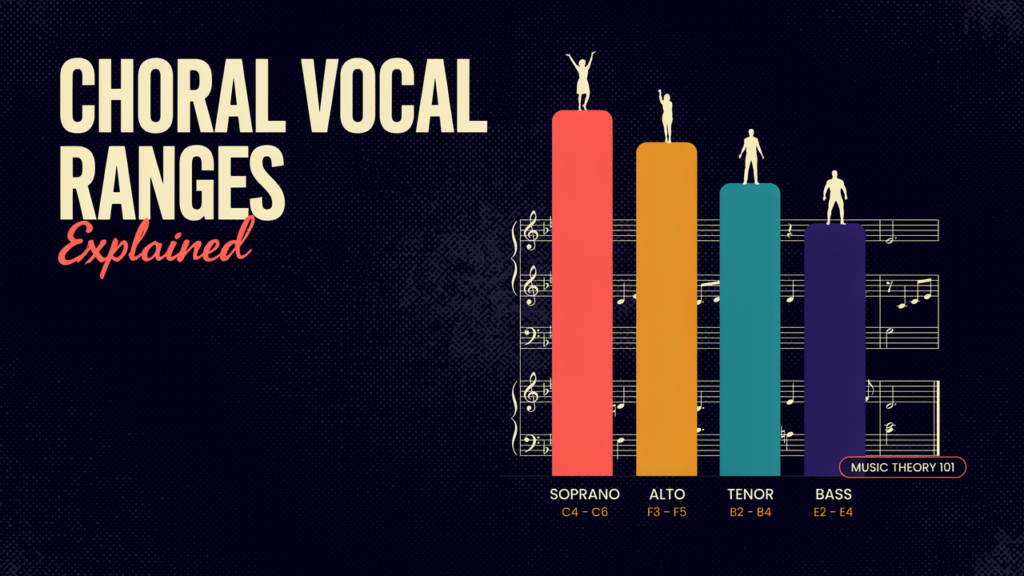
The SATB system is the most common framework for mixed choirs worldwide. The ranges below reflect commonly accepted functional choral ranges, using scientific pitch notation (middle C = C4).
Soprano (S)
- Typical choral range: C4 – A5
- Comfortable tessitura: E4 – G5
Sopranos usually carry melodies or upper harmony lines. Good choral writing avoids sustained extremes to prevent fatigue and loss of blend.
Alto (A)
- Typical choral range: G3 – D5
- Comfortable tessitura: B3 – B4
Altos provide inner harmony and warmth. Most choral altos are not true contraltos; “alto” is a section role, not a rare solo voice type.
Tenor (T)
- Typical choral range: C3 – G4
- Comfortable tessitura: E3 – E4
Tenors are the highest male voice part in mixed choirs. Sustained writing above E4 is usually reserved for advanced ensembles.
Bass (B)
- Typical choral range: E2 – C4
- Comfortable tessitura: G2 – E3
Bass parts anchor harmony and rhythm. Most choral bass writing emphasizes reliability and resonance, not extreme low notes.
Important: These ranges reflect what choirs can sustain, not the highest or lowest notes an individual singer might reach.
Tessitura vs range: the concept that matters most
Many problems in choral singing come from confusing range with tessitura.
- Range = absolute lowest to highest possible notes
- Tessitura = where the music sits most of the time
Choral music is written for tessitura because:
- Choirs rehearse for long periods
- Singers must preserve vocal health
- Blend deteriorates at extremes
- Endurance matters more than flexibility
A piece can technically fit a range and still be uncomfortable or damaging if the tessitura is poorly ch
“Finding your voice span calculator results can be very motivating.”
How choral vocal ranges vary by ensemble type
Children’s choirs
- Usually treble voices only
- Common working range: C4 – D5
- Gender-neutral voice parts
- Emphasis on healthy vocal development
Youth and school choirs
- Accommodate changing voices
- Often use SAB, SSA, or simplified SATB
- Conservative tessitura to protect voices
Church choirs
- Mixed levels of training
- Ranges favor comfort and consistency
- Flexible placement is common
Collegiate and professional choirs
- Wider usable ranges
- More demanding tessitura
- Frequent divisi writing
- Higher stamina expectations
Non-SATB choral formats and their implications
SSA / SSAA
- Treble choirs (women’s or youth)
- Narrower tessitura per part for blend
- Balance is critical in upper ranges
TTBB
- Male choirs
- Emphasis on mid-to-low tessitura
- Upper tenor writing managed carefully
SAB
- Used when tenor sections are limited
- Baritone parts bridge tenor and bass ranges
Divisi writing
- Splitting sections requires narrower tessitura, not wider
- Overuse increases fatigue and tuning issues
How choir directors assign voice parts
Directors rarely assign parts based on range alone. They usually consider:
- Comfortable tessitura
- Tone color and blend
- Stamina over long rehearsals
- Balance needs of the ensemble
- Reading skill and experience
It is normal—and healthy—for singers to move between parts as voices mature or ensemble needs change.
Common misconceptions about choral vocal ranges
Myth: “Higher parts mean better singers.”
→ False. Inner voices often require more precision and stamina.
Myth: “Bass singers must sing very low.”
→ Most choral bass writing sits in the mid-low range.
Myth: “Choir sopranos are always sopranos solo.”
→ Many altos sing soprano in choir.
Myth: “Range alone determines placement.”
→ Tessitura and blend matter far more.
Myth: “Choir singing is bad for your voice.”
→ Poor technique or poor writing causes problems—not choral singing itself.
Practical advice for singers
- Focus on where your voice feels easy and resonant
- Avoid forcing high or low notes for ego
- Communicate discomfort early
- Remember that blend is the goal, not volume
Healthy choral singing should feel sustainable, not exhausting.
Practical advice for directors and arrangers
- Write for tessitura, not extremes
- Know your ensemble’s ability level
- Use divisi thoughtfully
- Reassign parts when balance or strain appears
- Protect voices over long rehearsal cycles
Good choral leadership prioritizes long-term vocal health.
Why choral vocal ranges differ from solo singing
Solo singing emphasizes:
- Individual timbre
- Extended range
- Personal expression
Choral singing emphasizes:
- Unified sound
- Pitch stability
- Endurance
- Collective musicality
Neither approach is superior—they serve different musical purposes.
Final verdict
- Choral vocal ranges are functional, not extreme
- SATB ranges provide a global standard
- Tessitura matters more than absolute range
- Choir placement prioritizes blend, balance, and stamina
- Good choral writing and directing protect voices
- For an overview of ensemble parts, this choral range guide explains how SATB voices are grouped.
- You can also compare sections using a choir vocal range reference designed for mixed choirs.
- To understand comfort versus extremes, this what tessitura means breakdown is helpful.
- A visual vocal range chart makes it easier to see where each part sits.
- For broader context, this typical vocal range guide shows how voices are usually classified.
- Directors often rely on a quick voice type test when placing new singers.
- Preparing every section matters, and these choir-friendly warm-ups help keep voices healthy.

Conan is a vocal analysis and singing tools writer specializing in vocal range testing, pitch recognition, voice classification, and music education for singers, musicians, and beginners. He creates practical, easy-to-understand content focused on vocal analysis tools, singing improvement, and voice training resources.