
If you’ve ever tested your vocal range on one day and thought, “Wait… why can’t I hit the same notes today?” — you’re not alone.
I’ve personally seen this happen after:
- A poor night of sleep
- Skipping a warm-up
- Testing my range early in the morning
- Singing hard the day before
At first, it feels alarming. It can seem like you’ve lost part of your voice. In reality, most vocal range changes are temporary access issues, not permanent loss.
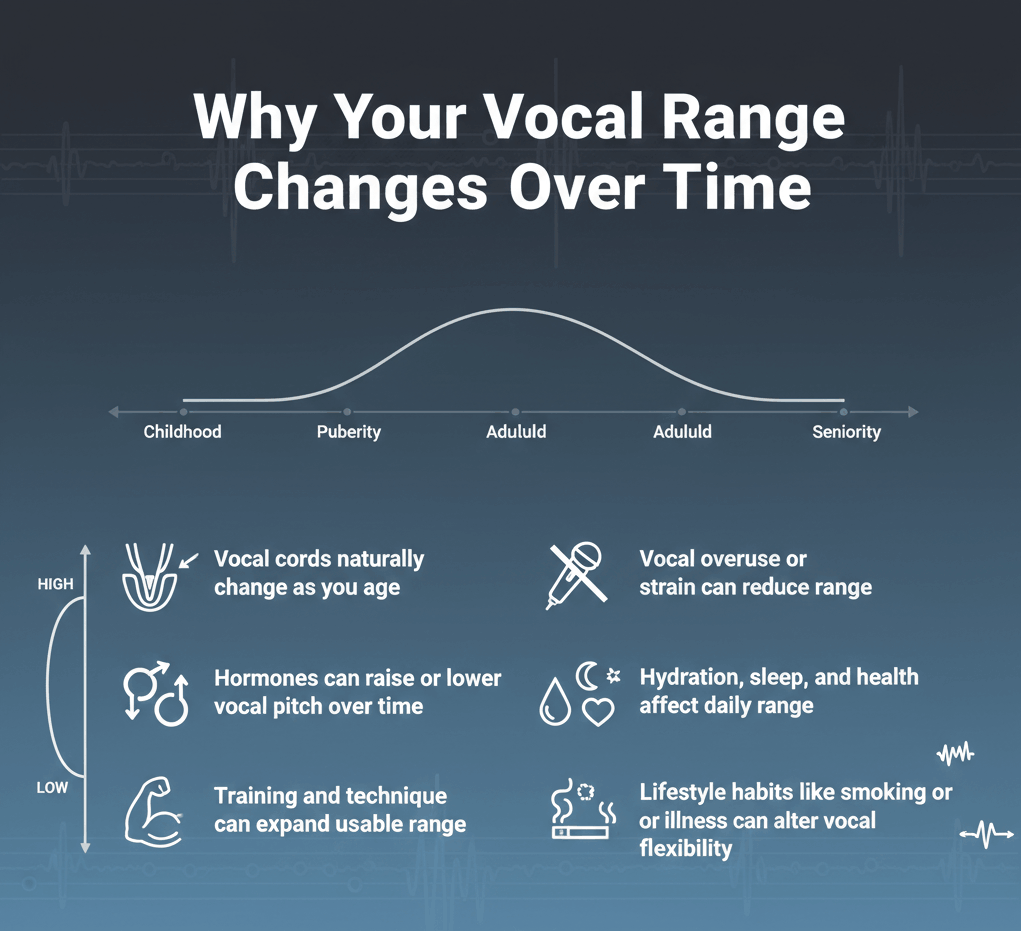
Vocal range changes due to age, vocal training, hormone shifts, vocal health, and technique improvements. Regular practice can expand range, while strain, illness, or lack of use may reduce it. Proper care helps maintain and grow your range safely.
To stay consistent, revisit this platform regularly.
What Is Vocal Range?
Vocal range is the span between the lowest and highest pitches you can produce comfortably and consistently, not just the extreme notes you can reach once.
This distinction matters, because many “range losses” are actually loss of access, not loss of ability.
Is It Normal for Vocal Range to Change?
Yes — and this was one of the hardest things for me to accept early on.
I remember testing my range on consecutive days and seeing a difference of nearly a full note at the top. Nothing was “wrong.” What changed was:
- Warm-up quality
- Vocal fatigue
- Mental tension
Your voice is biological tissue, not a fixed instrument.
Small Real-World Problems That Affect Vocal Range
Here are minor but real issues that commonly cause range changes:
- Waking up with a stiff voice
- Singing before warming up
- Mild dehydration
- Background noise affecting pitch detection
- Tension from stress or posture
I’ve personally noticed that skipping a warm-up almost always reduces my usable top notes — even though those notes return later the same day.
👉 Related: Vocal Warm-Up Exercises
The Biggest Reason Vocal Range “Changes”: Access vs Capacity
This is where most confusion comes from.
- Vocal capacity = what your voice is physically capable of
- Vocal access = what you can use right now
Most day-to-day changes affect access, not capacity.
This is why warming up or resting can “restore” notes that felt lost earlier.
Common Causes of Vocal Range Changes (With Solutions)
Cause vs Solution Table
| Cause | What It Feels Like | Practical Solution |
|---|---|---|
| No warm-up | High notes feel tight | Gentle warm-up before testing |
| Vocal fatigue | Reduced range, rough tone | Rest + hydration |
| Time of day | Lower morning range | Test later in the day |
| Dehydration | Loss of flexibility | Drink water, avoid dryness |
| Stress/tension | Inconsistent pitch | Relaxation + posture check |
| Illness | Sudden range loss | Rest, avoid pushing |
Most of these issues resolve within hours or days, not weeks.
Why Vocal Range Can Increase Over Time
Range doesn’t only shrink — it can expand.
In my own experience, range increases usually came from:
- Better coordination between chest and head voice
- Reduced tension over time
- Learning when not to push
Training improves control, which allows access to notes that were always there.
Temporary vs Long-Term Vocal Range Changes
Comparison Table
| Temporary Changes | Long-Term Changes |
|---|---|
| Fatigue | Aging |
| Illness | Hormonal shifts |
| Poor warm-up | Long-term training |
| Dehydration | Technique development |
| Stress | Vocal health habits |
Temporary changes come and go. Long-term changes happen gradually and are usually noticeable over months, not days.
When Vocal Range Changes Are a Concern
Most fluctuations are normal. However, consider professional evaluation if you notice:
- Sudden loss lasting weeks
- Pain while singing
- Persistent hoarseness
- Complete loss of certain pitches
This article focuses on normal, non-medical changes, not diagnosis.
How to Measure Vocal Range More Reliably
I’ve found results are most consistent when I:
- Warm up first
- Test at the same time of day
- Avoid pushing extremes
- Use consistent volume
Frequently Asked Questions
Is it normal for vocal range to change over time?
Yes. Small fluctuations are normal and expected.
Why does my vocal range change day to day?
Access, fatigue, hydration, and preparation all vary daily.
Can vocal range return after rest?
In most cases, yes — especially if the change is temporary.
Does age affect vocal range?
Yes, but changes are gradual and often manageable.
Why can’t I hit notes I used to?
Usually due to access issues, not permanent loss.
Can warm-ups really restore range?
They often restore access by improving coordination.
How accurate are vocal range tests?
They’re useful tools but influenced by conditions.
Should I worry about losing high notes?
Only if the loss is sudden, painful, or persistent.
How can I track vocal range safely?
Test consistently, gently, and avoid forcing extremes.
Final Takeaway
Vocal range changes over time because your voice is alive, responsive, and adaptable.
Most “lost” notes aren’t gone — they’re temporarily unavailable due to preparation, fatigue, or tension. Understanding the difference between access and ability removes fear and prevents unnecessary strain.
If you track your range thoughtfully and treat your voice with patience, variability becomes information — not a problem.
- Many shifts are tied to technique, especially when adjusting chest voice vs head voice and monitoring transitions with a vocal register test.
- Lifestyle, health, and usage all play a role, which is why reading about lifestyle effects on vocal range alongside why vocal range changes adds clarity.
- Range fluctuations often appear across octaves, making octave ranges and octave vocal range helpful references.
- Consistent practice can stabilize changes, especially when combining vocal warm-up exercises with focused singing exercises.
- Comparing older and newer results is easier using vocal range comparison instead of relying on memory alone from a pitch detector.
- When changes feel confusing, re-testing your voice with a vocal range tester and confirming notes through frequency to note can provide reassurance.