Vocal warm-up exercises are structured, low-intensity activities that prepare the vocal cords, breathing system, and resonance muscles for singing or speaking. When done correctly, they reduce vocal strain, improve pitch stability, and help you access your true usable vocal range more consistently.
This guide focuses on accuracy, safety, and real vocal mechanics—not generic singing advice. Try the range calculation tool before training.
Vocal warm-up exercises include lip trills, humming, sirens, scale runs, and breath control drills. These improve vocal flexibility, increase range, enhance tone, and reduce strain. Warm up 10–15 minutes daily to protect your voice and sing with better control.
What Are Vocal Warm-Up Exercises?
Vocal warm-up exercises are gentle breathing and vocal activities that gradually prepare the voice by improving airflow coordination, vocal fold flexibility, and resonance efficiency before singing or speaking.
Their role is preparation, not training or range expansion.
Why Vocal Warm-Ups Matter
The vocal cords are soft tissue. When cold or stiff, they vibrate inefficiently and require more pressure to produce sound. Warm-ups help by:
- Increasing blood flow to the vocal folds
- Reducing stiffness in the laryngeal muscles
- Improving breath-to-voice coordination
- Stabilizing pitch production
Skipping warm-ups increases the likelihood of:
- Voice cracks
- Early fatigue
- Throat tension
- Strain on high or sustained notes
Warm-ups are especially important before measuring vocal range, since unprepared vocal cords often underperform.
👉 Related: How to Find Your Vocal Range
How Vocal Warm-Ups Affect Vocal Range
Vocal warm-ups do not increase vocal range.
What they do:
- Allow access to your current functional range
- Improve note-to-note consistency
- Reduce false limitations caused by tension or poor airflow
This is why vocal range results often appear wider and more stable after warming up—even though the physical range itself hasn’t changed.
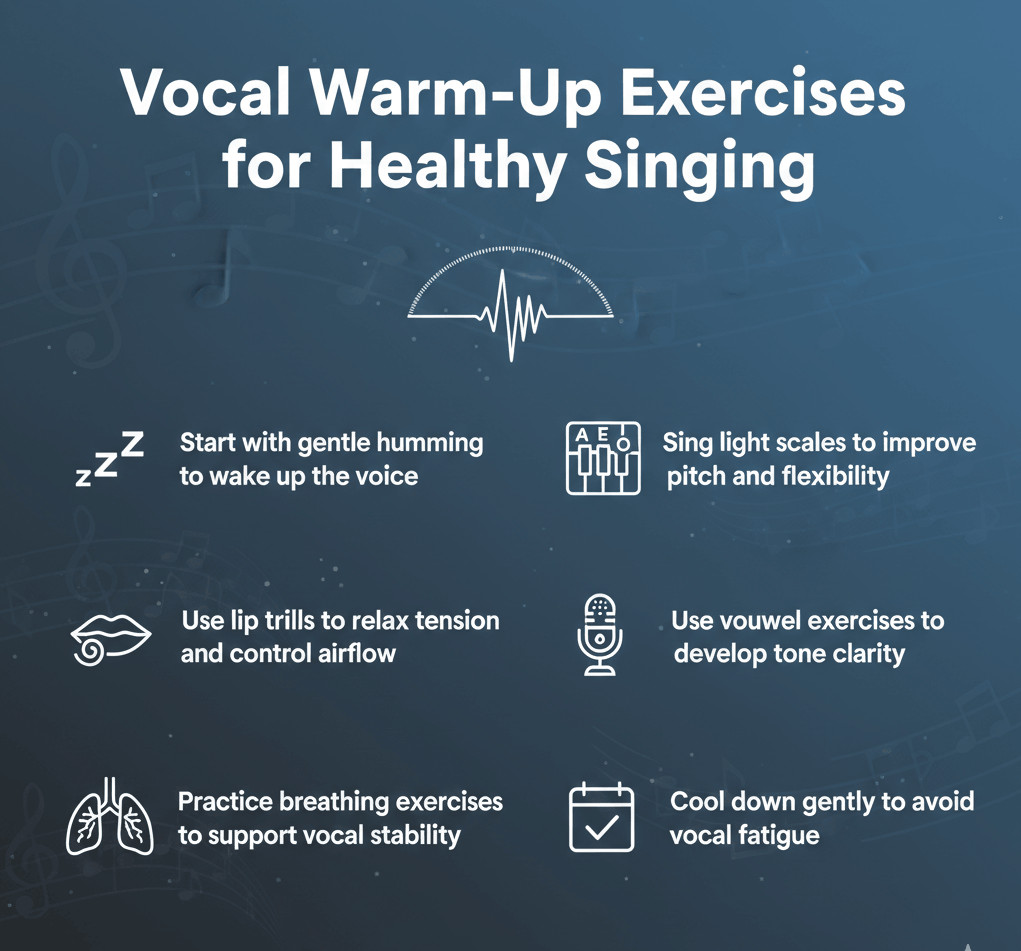
Types of Vocal Warm-Up Exercises
Effective warm-ups follow a progressive sequence, moving from low effort to light pitch activation.
1. Breathing Warm-Ups
Purpose: Activate breath support without pitch.
Examples:
- Slow nasal inhale → controlled mouth exhale
- Sustained “sss” or “zzz” sounds
This prepares airflow control before the vocal cords engage.
2. Semi-Occluded Vocal Tract (SOVT) Exercises
Purpose: Encourage efficient vocal fold vibration with minimal pressure.
Common SOVT exercises:
- Lip trills (brrr)
- Gentle humming
- Straw phonation (optional)
These exercises are widely used by vocal coaches because they reduce strain while improving coordination, making them ideal for beginners.
3. Resonance Warm-Ups
Purpose: Activate resonance without forcing volume.
Examples:
- Humming on “mm” or “ng”
- Light vowel slides (oo → ee)
Resonance warm-ups help shift effort away from the throat and into the vocal tract.
4. Gentle Pitch Activation
Purpose: Prepare pitch accuracy without pushing range.
Examples:
- Soft 3- to 5-note patterns
- Sirens limited to a comfortable range
Avoid aggressive high notes at this stage. Warm-ups should approach, not challenge, vocal limits.
For deeper understanding, see:
👉 How Vocal Cords Produce Pitch
Step-by-Step Vocal Warm-Up Routine
A safe 5–10 minute vocal warm-up routine:
- 1–2 minutes of controlled breathing
- 2 minutes of lip trills or humming
- 2–3 minutes of resonance exercises
- 2–3 minutes of gentle pitch patterns
Stop immediately if you feel:
- Throat tightness
- Sharp discomfort
- Loss of vocal control
Warm-ups should feel easier, not harder, as they progress.
How Long Should Vocal Warm-Ups Last?
Most voices need 5–15 minutes.
- Beginners: 5–10 minutes
- Experienced singers: 10–15 minutes
- Cold mornings or dry environments: slightly longer
Longer is not better. Over-warming can fatigue the voice before use.
Vocal Warm-Ups vs Vocal Training Exercises
| Vocal Warm-Ups | Vocal Training |
|---|---|
| Prepare the voice | Develop skill or range |
| Low intensity | Moderate to high intensity |
| Short duration | Longer sessions |
| Reduce strain | Build strength and control |
Warm-ups should precede training, not replace it.
Common Vocal Warm-Up Mistakes
Avoid these frequent errors:
- Singing high notes too early
- Warming up at full volume
- Skipping breathing exercises
- Treating warm-ups as range training
- Ignoring discomfort or fatigue signals
Most vocal strain blamed on “bad technique” actually comes from poor preparation.
When Vocal Warm-Ups Are Especially Important
- Before vocal range testing
- Before singing high or sustained notes
- After vocal rest or illness
- When the voice feels inconsistent
Daily fluctuations in range are often explained by preparation quality, not loss of ability.
👉 Related: Why Vocal Range Changes
Frequently Asked Questions
1. What are vocal warm-up exercises?
They are gentle breathing and vocal activities that prepare the voice for safe use.
2. Are vocal warm-ups necessary every time?
Yes. Even short singing or speaking sessions benefit from basic warm-ups.
3. How long should vocal warm-ups take?
Typically 5–15 minutes, depending on experience and conditions.
4. Can vocal warm-ups increase vocal range?
No. They help access your existing range more consistently.
5. What are the safest vocal warm-ups for beginners?
Lip trills, humming, and breathing exercises.
6. Should vocal warm-ups include high notes?
Only lightly and only after lower notes feel easy.
7. Can you damage your voice by warming up incorrectly?
Yes. Forcing volume or range during warm-ups can cause strain.
8. Is it okay to warm up without an instrument?
Yes. Most effective warm-ups are instrument-free.
9. Do vocal warm-ups improve pitch accuracy?
Yes. They improve coordination and airflow control, which stabilizes pitch.
10. Should I warm up before testing my vocal range?
Always. Cold vocal cords can produce inaccurate results.
Final Takeaway
Vocal warm-up exercises are essential for healthy, reliable voice use. When done correctly, they improve consistency, reduce strain, and help ensure accurate vocal range measurement.
They should be short, gentle, structured, and purpose-driven—never rushed or forced.
If your next step is testing or training your voice, warming up is not optional.
- Effective preparation starts with understanding vocal warm-up exercises and how they protect your voice before testing your limits with a vocal range tester.
- Warm-ups work best when paired with knowledge of what vocal range is and awareness of how different vocal registers engage during singing.
- Gentle routines improve control across registers, especially when practicing chest voice vs head voice and tracking pitch using a pitch detector.
- Singers preparing for range work benefit from structured singing exercises combined with accurate vocal range comparison over time.
- Proper warm-ups support long-term growth, especially when paired with techniques to increase vocal range and guided by consistent vocal warm-up exercises.
- Understanding where tension appears is easier when reviewing why vocal range changes and testing transitions with a vocal register test.
- After warming up, singers can confidently assess readiness by checking notes with a pitch detector and confirming placement using a vocal range tester.